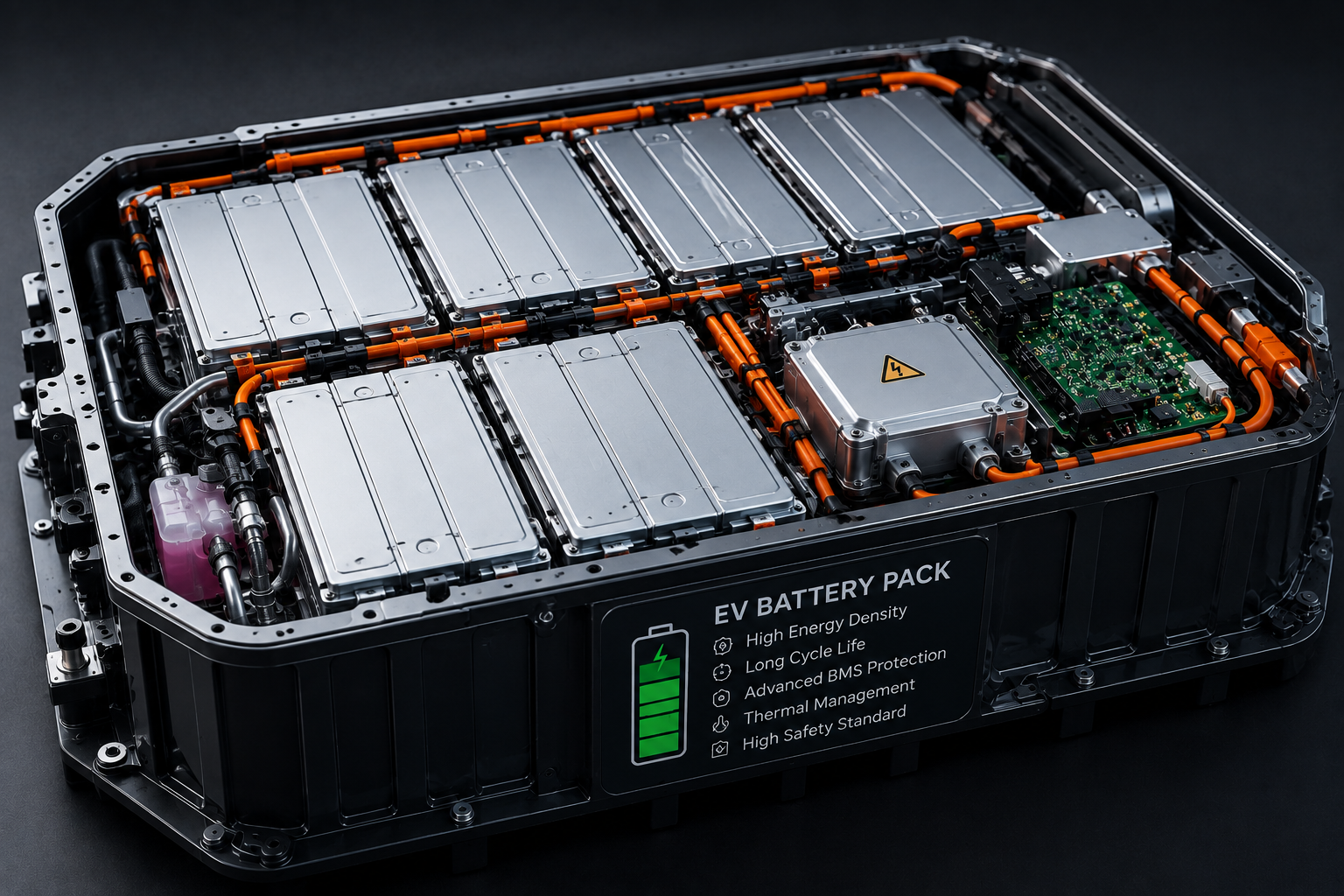
An EV battery pack is made up of many electrical, electronic, mechanical and thermal components. Every component contributes to the safe and reliable operation of the complete battery system.
While battery cells store electrical energy, components such as the BMS, busbars, connectors, fuses and contactors help monitor, control and distribute electrical power throughout the battery pack.
Understanding these components is important when building, servicing, repairing or upgrading an EV battery system.
Table of Contents
Main EV Battery Components Battery Cells Battery Management System Busbars Battery Connectors Contactors Battery Fuses Temperature Sensors Battery Wiring and Cables Thermal Components Choosing Battery Components ConclusionMain EV Battery Components
An EV battery pack contains several components that work together to store, control and distribute electrical energy.
The exact components can vary depending on the battery architecture and vehicle application.
Battery Cells
Store electrical energy and form the basic building blocks of the battery pack.
BMS
Monitors and manages important battery parameters.
Busbars
Provide electrical connections between cells and battery sections.
Connectors
Connect electrical and signal circuits within the battery system.
EV Battery Cells
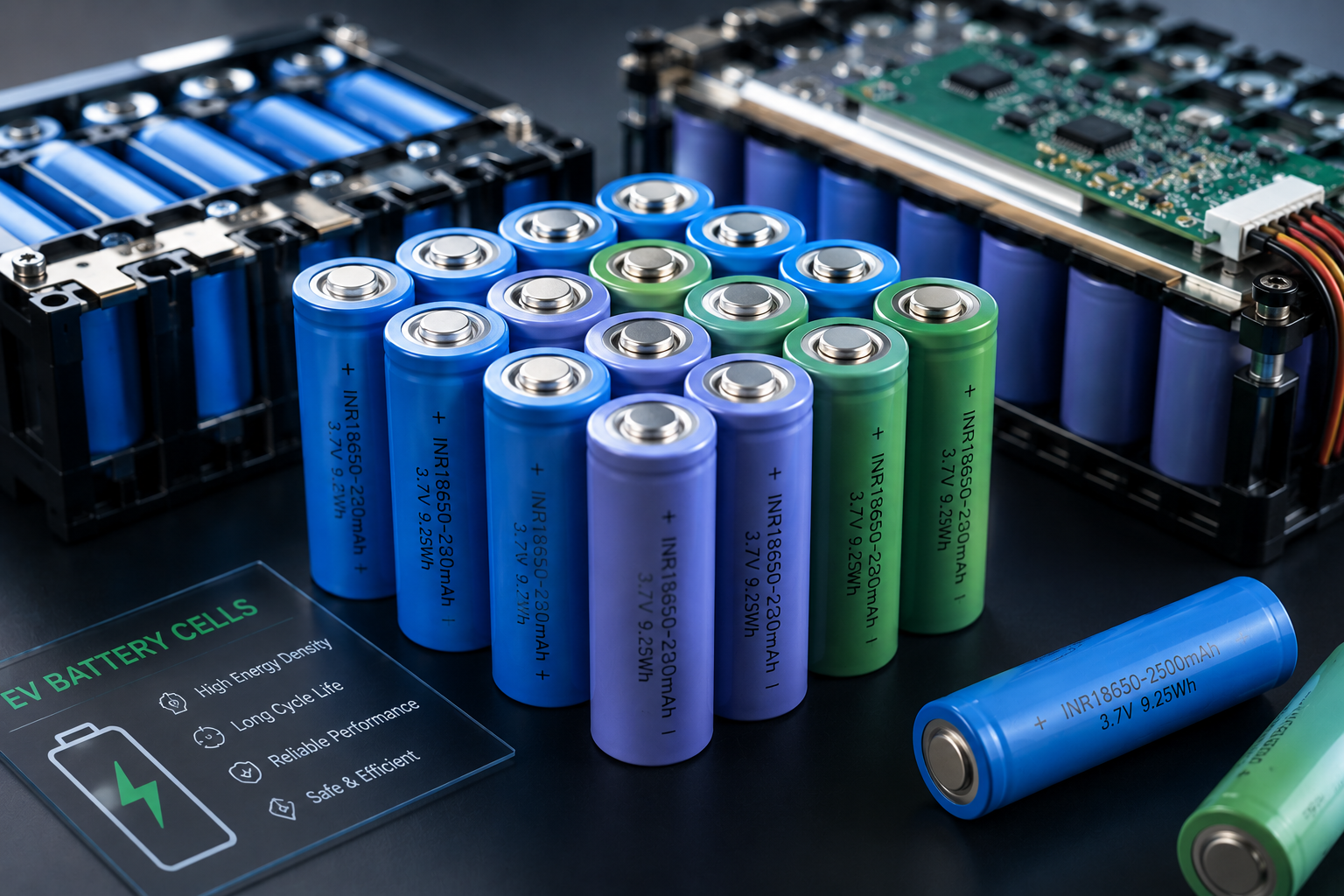
Battery cells are the primary energy-storage components in an EV battery pack.
Multiple cells can be connected in series and parallel configurations to achieve the required voltage, capacity and current characteristics.
EV battery systems can use different cell formats such as cylindrical, prismatic and pouch cells.
Selecting suitable cells is an important part of battery pack design because cell characteristics directly influence the overall battery system.
Battery Management System
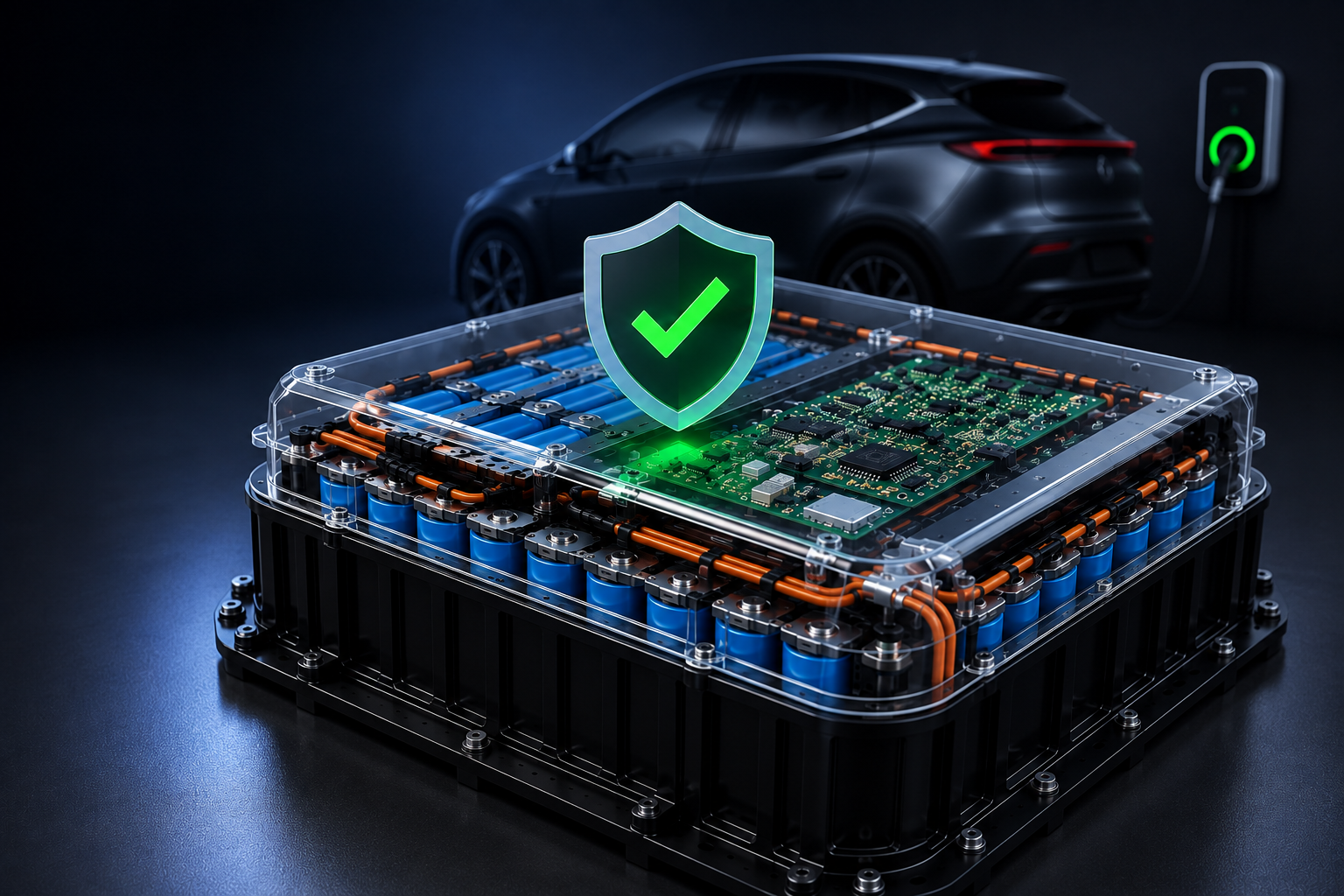
The Battery Management System, or BMS, is one of the most important electronic components in an EV battery pack.
It monitors parameters such as cell voltage and temperature and supports battery management and protection functions.
Voltage Monitoring
Monitors voltage information from battery cells and sections.
Temperature Monitoring
Receives temperature data from sensors within the battery system.
Battery Monitoring
Tracks important battery operating parameters.
Protection
Supports battery protection according to system requirements.
Battery Busbars
Busbars are conductive components used to create electrical connections between battery cells, modules and other battery sections.
They are designed according to the electrical and mechanical requirements of the battery system.
Electrical Connection
Busbars provide conductive paths between battery components.
POWERPack Integration
They help connect cells and modules according to the battery architecture.
CONNECTIONEV Battery Connectors
Connectors are used to establish electrical and signal connections between different parts of the battery system.
Depending on the application, a battery pack can contain power connectors, low-voltage connectors and communication connectors.
Power Connectors
Used for electrical power connections between battery components.
Signal Connectors
Used for low-voltage signals and monitoring connections.
Communication
Can connect battery electronics with communication networks within the vehicle.
Battery Contactors
Contactors are electrically controlled switching devices used to connect or disconnect high-voltage battery power from the vehicle system.
They are an important part of the electrical architecture in many high-voltage EV battery systems.
Contactors allow the battery system to control when the high-voltage electrical path is connected or disconnected.
EV Battery Fuses
Fuses are protective electrical components designed to interrupt a circuit when excessive current reaches the fuse's specified operating conditions.
Battery systems can use appropriately rated fuses as part of their electrical protection architecture.
Provides protection against certain excessive-current conditions.
Forms part of the overall electrical protection strategy.
Fuse selection depends on the electrical requirements of the battery system.
Battery Temperature Sensors
Temperature sensors provide the BMS with information about the thermal condition of the battery.
Sensor placement and the number of measurement points depend on the battery design and monitoring requirements.
Temperature
Measures temperature at selected points within the battery system.
BMS Input
Temperature information can be provided to the BMS for monitoring.
Monitoring
Helps identify changes in battery thermal conditions.
Battery Wiring and Cables
Electrical cables and wiring are used to connect battery cells, modules, monitoring electronics and other components.
Different circuits can require different cable specifications depending on voltage, current, environment and system requirements.
Cable selection should consider the electrical and environmental requirements of the intended battery application.
Battery Thermal Components
EV battery systems can contain several components associated with thermal management.
The exact components depend on whether the battery uses air cooling, liquid cooling, heating or another thermal architecture.
Fans
Can be used to move air through suitable battery systems.
Cooling Circuit
Liquid-based systems can use dedicated cooling circuits.
Cooling Plates
Thermal interfaces can help transfer heat from battery components.
Heating Elements
Some battery systems can incorporate heating components.
How to Choose EV Battery Components
Choosing battery components requires understanding the electrical, mechanical and environmental requirements of the battery system.
Components should be selected based on the actual battery architecture and application rather than simply choosing individual parts in isolation.
| Component | Important Considerations |
|---|---|
| Battery Cells | Cell format, characteristics, capacity and electrical requirements. |
| BMS | Cell configuration, monitoring requirements and battery architecture. |
| Busbars | Electrical connection, mechanical integration and system requirements. |
| Connectors | Voltage, current, signal and environmental requirements. |
| Contactors | High-voltage switching and battery system requirements. |
| Fuses | Electrical protection requirements and appropriate ratings. |
| Sensors | Temperature monitoring and BMS integration requirements. |
Conclusion
EV battery performance depends on much more than the battery cells themselves. Components such as BMS boards, busbars, connectors, contactors, fuses, sensors and thermal components all play important roles in the complete battery system.
Selecting the appropriate components and integrating them correctly is essential when developing or servicing an EV battery pack.
Understanding each component makes it easier to identify the right parts for battery assembly, maintenance and replacement requirements.
Complete Battery Solutions
From battery cells and BMS boards to connectors, busbars, fuses and other components, every part contributes to the complete EV battery system.