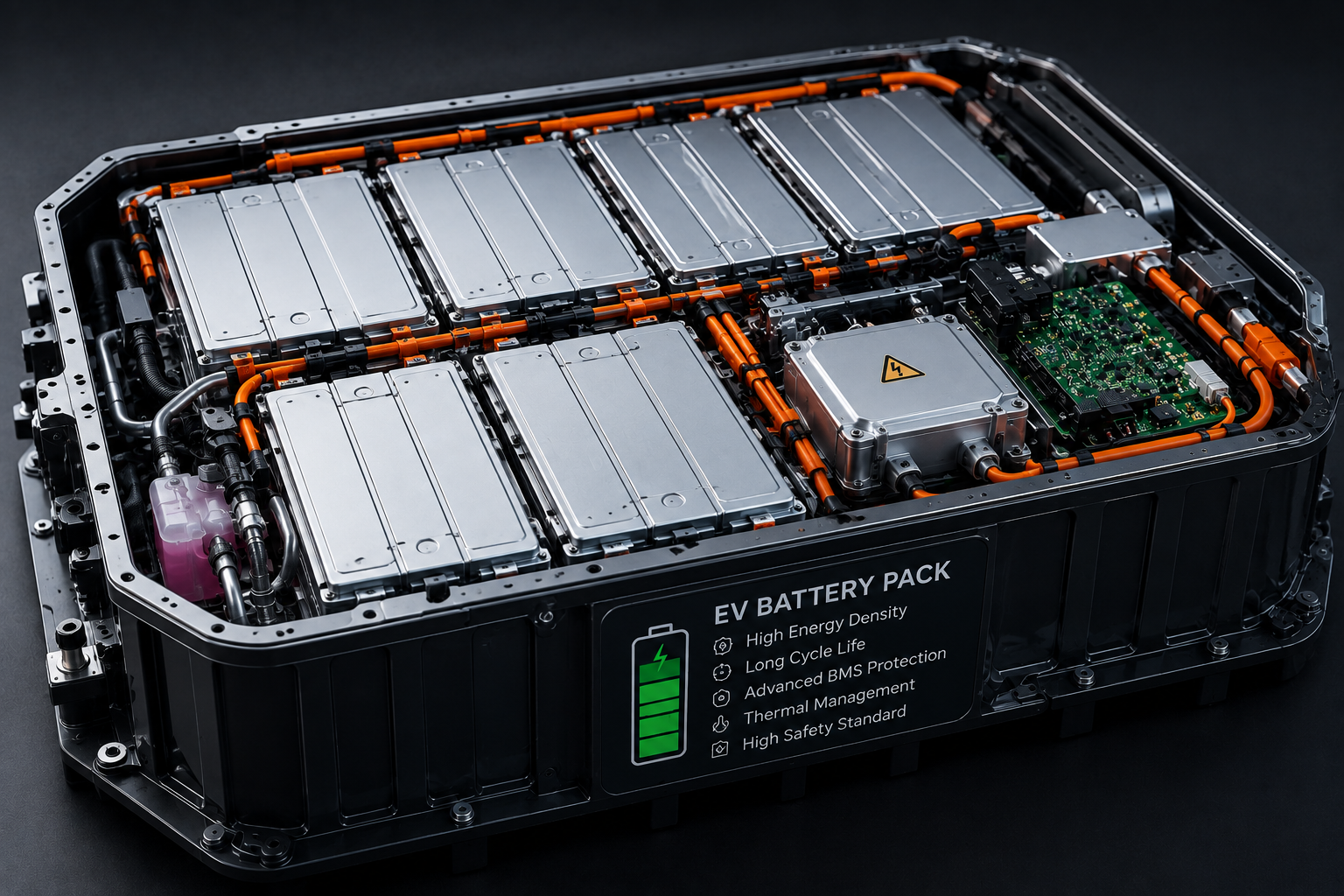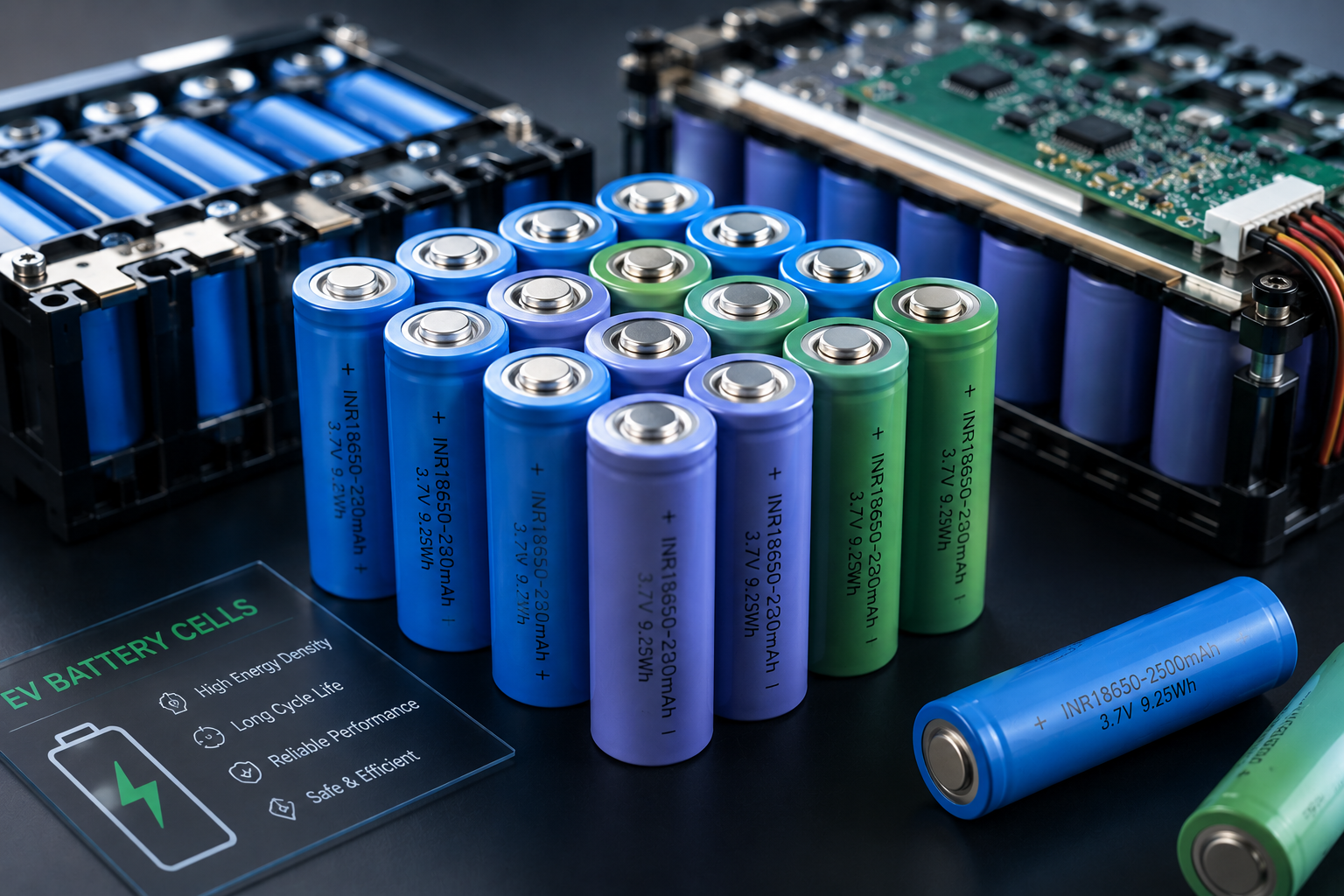
Battery cells are the fundamental building blocks of an electric vehicle battery pack. Multiple cells are connected together to achieve the required voltage, capacity and power.
The performance of an EV battery pack depends heavily on the characteristics of the cells used inside it. Factors such as energy density, power capability, cycle life, safety and operating temperature can influence the overall battery system.
Choosing the right battery cell is therefore an important step when designing or sourcing an EV battery pack.
Table of Contents
What is an EV Battery Cell? Types of EV Battery Cells Cylindrical Battery Cells Prismatic Battery Cells Pouch Battery Cells Key Battery Performance Factors Energy Density Power Capability Cycle Life How to Select Battery Cells ConclusionWhat is an EV Battery Cell?
A battery cell is the basic electrochemical unit that stores and releases electrical energy. EV battery packs are made by connecting multiple individual cells together.
Cells can be connected in series to increase the overall voltage and in parallel to increase the available capacity and current capability.
The resulting combination of cells forms modules or battery packs that can be integrated into electric vehicles and other energy storage applications.
Individual cells are combined in specific series and parallel configurations to create the required voltage, capacity and power characteristics of a battery pack.
Types of EV Battery Cells
EV battery cells are available in different physical formats. The most commonly discussed formats are cylindrical, prismatic and pouch cells.
Cylindrical Cells
Cylindrical cells have a round metal casing and are manufactured in standardized dimensions. They can be combined in large numbers to create battery packs.
CYLINDRICALPrismatic Cells
Prismatic cells use a rigid, rectangular casing. Their shape can allow efficient packaging within a battery module.
PRISMATICPouch Cells
Pouch cells use a flexible packaging material and can offer flexibility in battery pack design.
POUCHCylindrical Battery Cells
Cylindrical cells have been widely used in rechargeable battery applications. Their standardized cylindrical shape makes them suitable for automated manufacturing and large-scale cell assembly.
Multiple cylindrical cells can be connected together using appropriate electrical connections to create battery modules and packs.
Modular Design
Individual cells can be arranged into different pack configurations.
Rigid Housing
The metal casing provides a defined physical cell structure.
Pack Integration
Cells can be interconnected to achieve the required pack voltage and capacity.
Prismatic Battery Cells
Prismatic cells use a rectangular, rigid casing. Their larger individual cell format can simplify certain battery pack layouts by reducing the number of cells required for a given pack configuration.
Prismatic cells are commonly considered when packaging efficiency, mechanical structure and cell-level capacity are important design factors.
The rigid rectangular shape can make prismatic cells suitable for compact and structured battery pack designs.
Pouch Battery Cells
Pouch cells use a flexible outer packaging rather than a rigid cylindrical or rectangular metal enclosure.
Their flexible form factor provides designers with additional options when arranging cells within a battery pack.
Flexible Packaging
The flexible enclosure provides design flexibility for certain battery pack layouts.
Pack Design
Pouch cells can be arranged in configurations suited to the available battery space.
Cell Arrangement
Multiple pouch cells can be combined to create battery modules and packs.
Mechanical Protection
Appropriate mechanical support and protection are important when integrating pouch cells into a pack.
Key Battery Performance Factors
Selecting an EV battery cell is not simply about physical size or form factor. Several electrical and operational characteristics need to be considered.
Indicates how much energy can be stored relative to the mass or volume of the cell.
Indicates the cell's ability to deliver or accept electrical power.
Describes how the cell can perform through repeated charge and discharge cycles.
Cell performance can vary depending on operating and charging temperature.
Cell chemistry, construction and operating conditions all contribute to battery safety.
Energy Density
Energy density is an important factor when designing an EV battery because available vehicle space and battery weight are limited.
A higher energy density cell can store more energy for a given mass or volume, which can be valuable for applications where range and packaging efficiency are important.
Battery energy density can influence the overall energy capacity, pack size and weight of an EV battery system.
Power Capability
EV battery cells must be capable of delivering the power required by the vehicle during acceleration and other high-load operating conditions.
The required power capability also depends on the charging requirements and the overall battery pack design.
Discharge Power
Determines how effectively the battery can supply power to the vehicle electrical system.
POWER OUTPUTCharging Capability
The cell must support the charging conditions required by the battery pack and charging system.
CHARGINGBattery Cell Cycle Life
Cycle life is another important factor when selecting cells for an EV battery application.
Battery cells experience repeated charging and discharging during normal operation. Their performance can change over time depending on factors such as usage conditions, charging conditions, temperature and operating limits.
Charge Cycles
Cells are repeatedly charged and discharged throughout their service life.
Temperature
Operating temperature can influence long-term cell performance.
Usage Conditions
Current levels and operating conditions can affect battery ageing.
Capacity Retention
Battery capacity can gradually change as cells age.
How to Select the Right EV Battery Cells
Selecting the right cell requires balancing electrical requirements, physical constraints, performance expectations and overall battery design.
| Factor | What to Consider |
|---|---|
| Cell Format | Cylindrical, prismatic or pouch depending on the battery design. |
| Voltage | Nominal and operating voltage requirements of the battery system. |
| Capacity | Required energy capacity for the intended application. |
| Current Capability | Required charging and discharging current. |
| Cycle Life | Expected service life and operating conditions. |
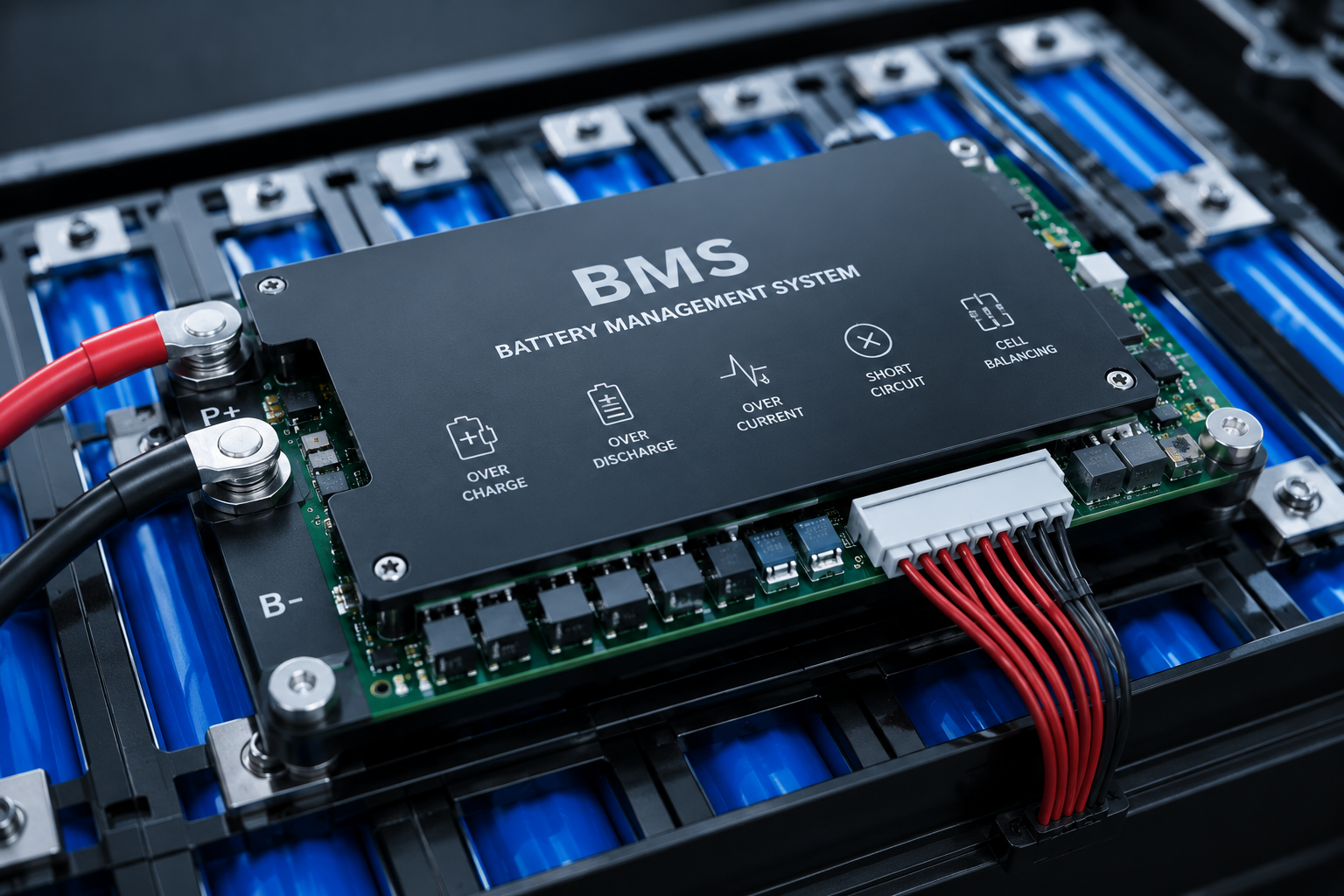
| BMS Compatibility | Compatibility with the selected Battery Management System and battery configuration. |
Conclusion
Battery cells are the foundation of every EV battery pack. Their physical format, electrical characteristics and performance directly influence the overall battery system.
Cylindrical, prismatic and pouch cells each offer different design characteristics. The right choice depends on the requirements of the vehicle, battery architecture and intended application.
By carefully considering cell format, voltage, capacity, power capability, cycle life, thermal behaviour and BMS compatibility, manufacturers can develop battery packs suited to their specific requirements.
Choosing the Right Battery Cell
The right cell selection is an important foundation for building a reliable and efficient EV battery pack.