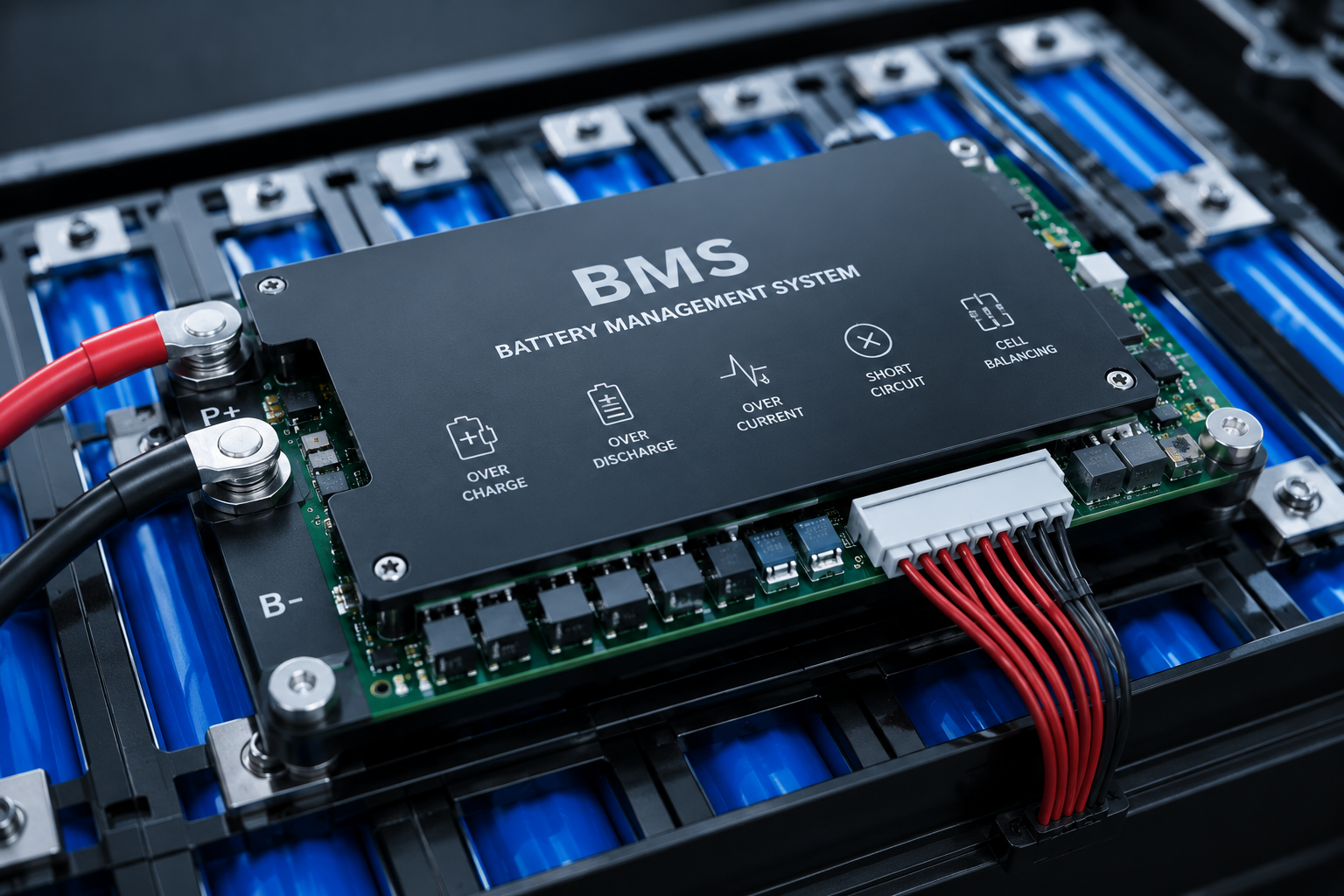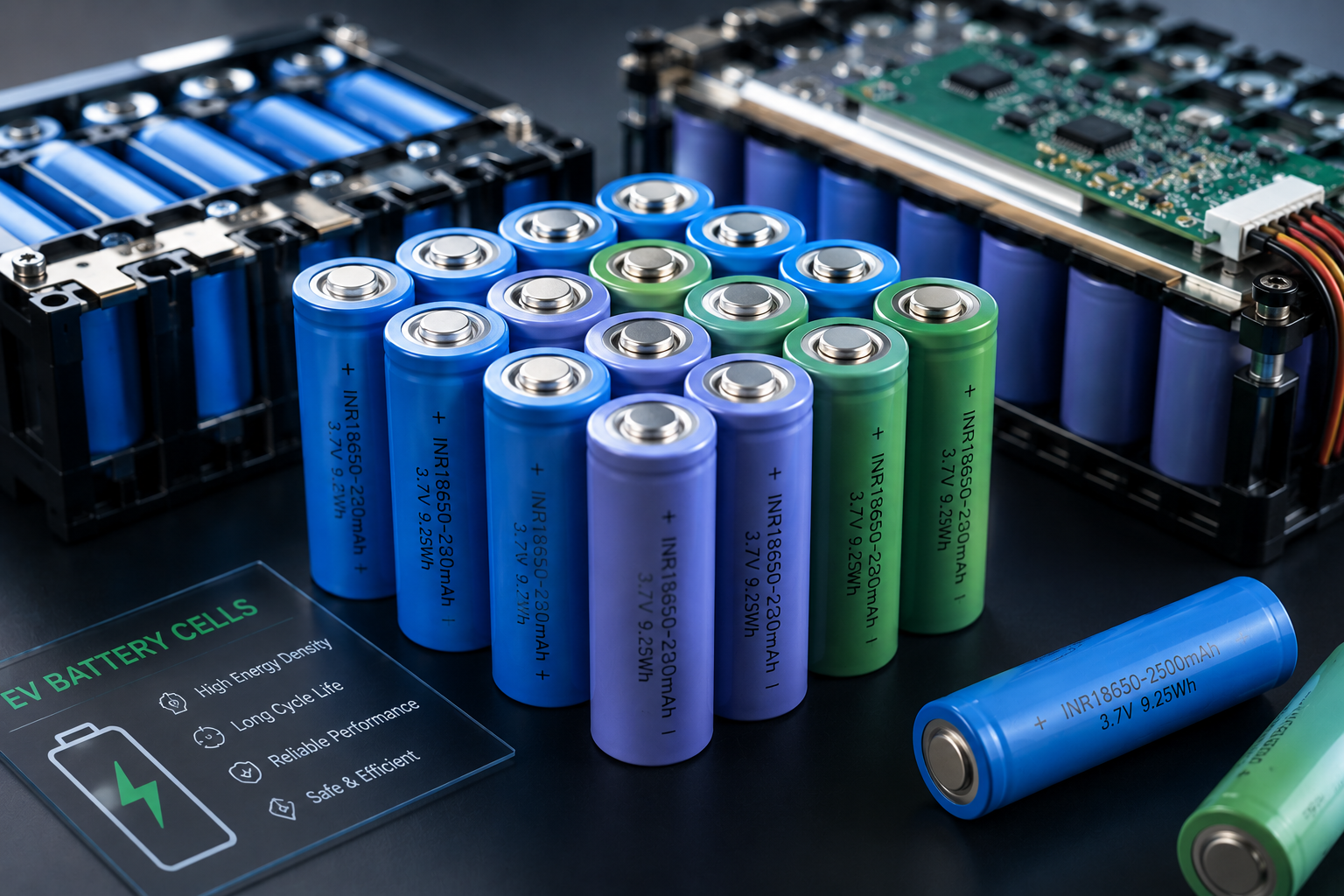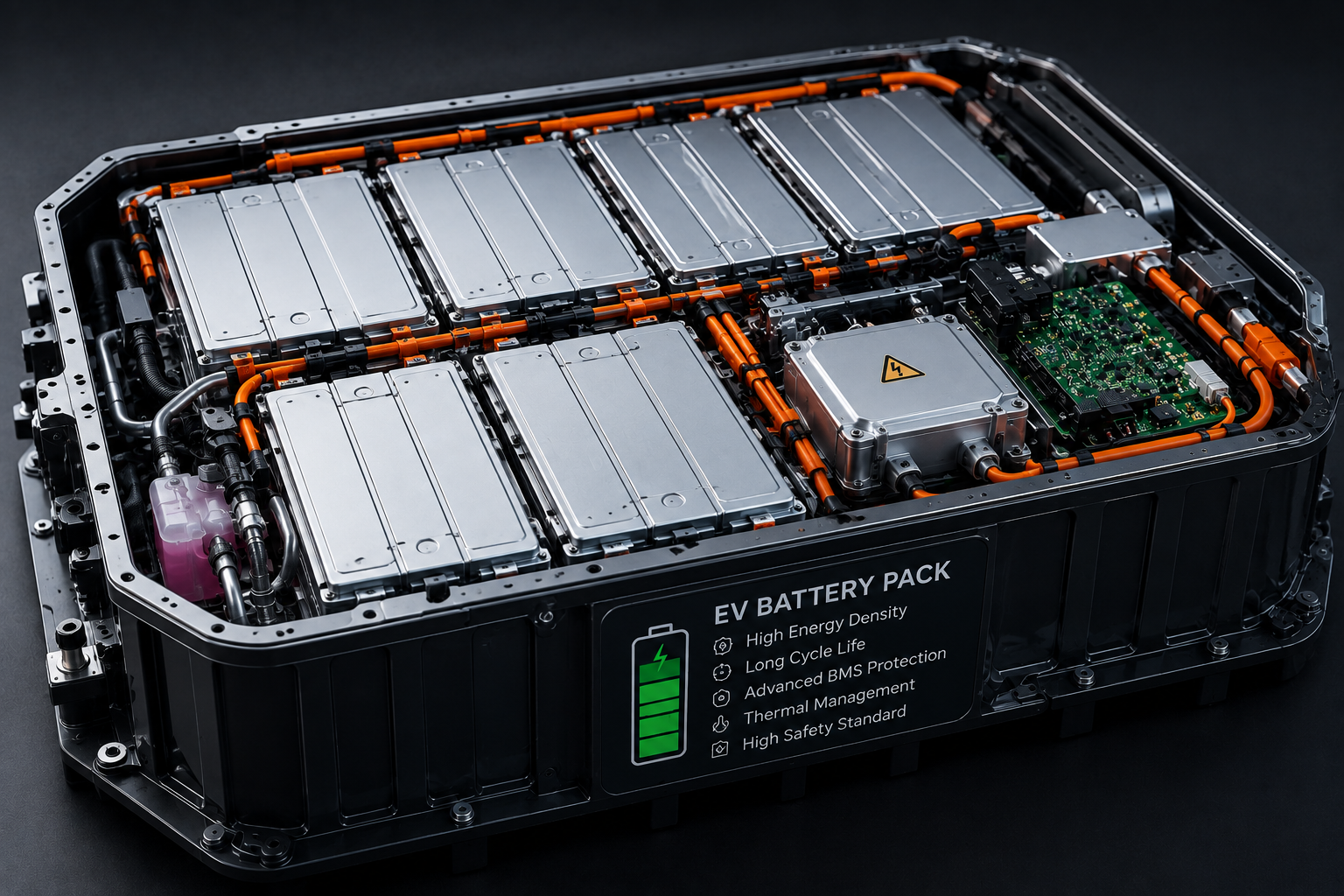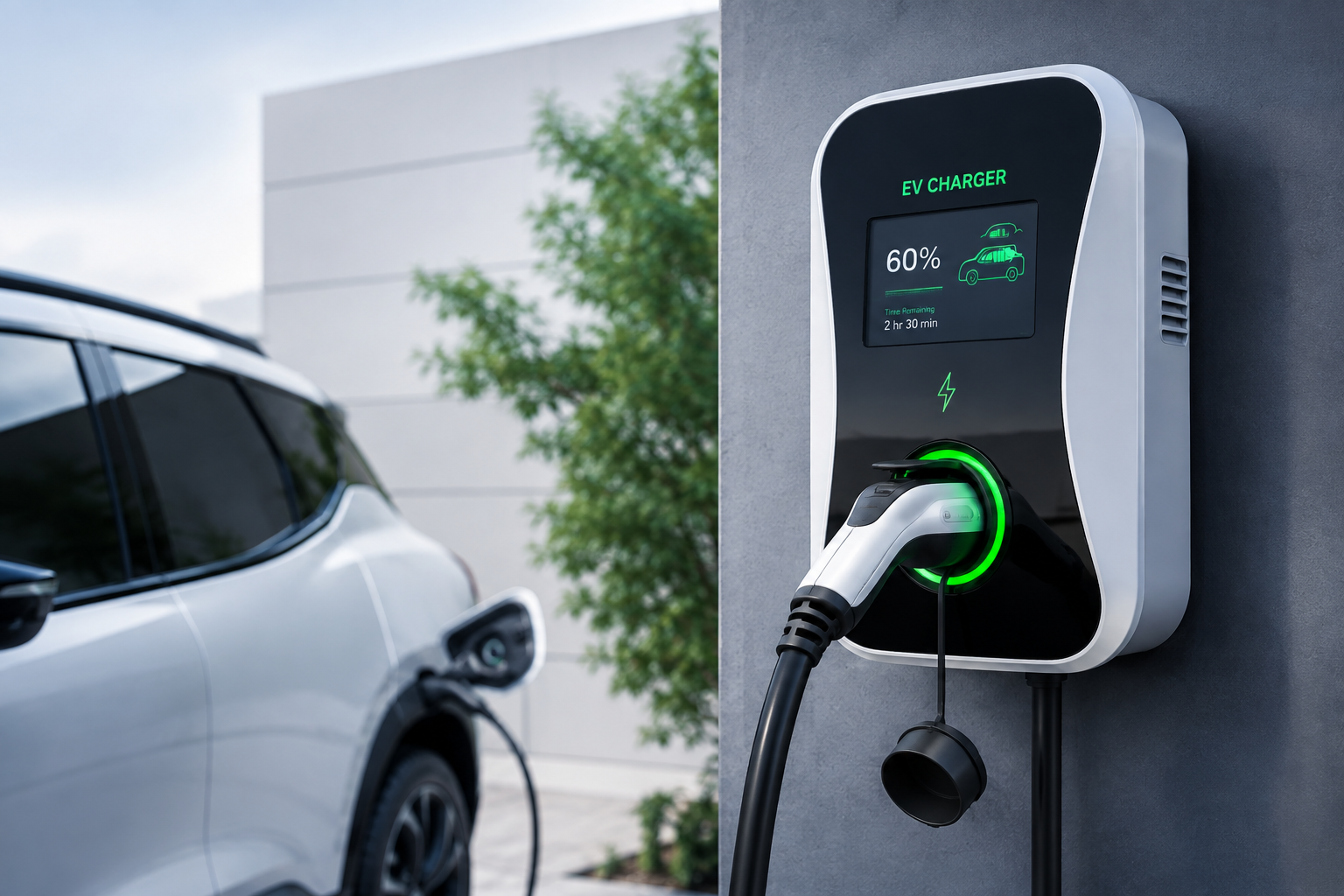
Electric vehicles are rapidly changing the way we think about transportation. As EV adoption continues to grow, the charging system has become one of the most important parts of the electric mobility ecosystem.
An EV battery charger is responsible for transferring electrical energy from a power source into the vehicle's battery pack. The charging system must deliver the required power while maintaining safe voltage, current and temperature conditions.
In this guide, we will understand what an EV battery charger is, how it works, different charger types, charging speed, connectors, safety features and the important factors to consider when selecting an EV charging solution.
Table of Contents
What is an EV Battery Charger? How Does an EV Charger Work? Types of EV Chargers Understanding Charging Speed EV Charging Connectors How to Choose the Right Charger EV Charger Safety ConclusionWhat is an EV Battery Charger?
An EV battery charger is an electrical device that transfers energy from an electrical source to the battery pack of an electric vehicle.
The charger manages the electrical energy supplied to the vehicle and ensures that the battery receives appropriate voltage and current during the charging process.
A properly designed charging system helps provide efficient, reliable and safe energy transfer to the EV battery.
How Does an EV Charger Work?
EV charging involves several stages. The charging system receives electricity from a power source, processes it and delivers the required energy to the vehicle battery.
Power Input
Electricity enters the charging system from the electrical grid or another suitable power source.
Power Conversion
The charging system regulates and converts electrical power according to the vehicle's charging requirements.
Vehicle Communication
The charger and vehicle communicate to determine suitable charging conditions.
Energy Transfer
Electrical energy is delivered to the battery while the charging system monitors important parameters.
Types of EV Chargers
EV chargers can be classified based on their charging architecture, output power and intended application.
AC EV Chargers
AC chargers are commonly used for home, residential and workplace charging. Electricity is supplied as AC and the vehicle's onboard charger converts it into the required DC power.
Home & Workplace ChargingDC Fast Chargers
DC fast chargers supply controlled DC power to the vehicle battery and are designed for significantly faster charging.
Public & Commercial ChargingPortable EV Chargers
Portable charging solutions provide flexibility for situations where users need charging capability at different locations.
Flexible ChargingUnderstanding EV Charging Speed
Charging speed is one of the most important factors when selecting an EV charging solution. However, the charging speed is not determined only by the charger.
The vehicle's maximum charging capability, battery capacity, battery temperature, state of charge and electrical infrastructure can all affect charging performance.
| Charging Type | Power Level | Common Application |
|---|---|---|
| Standard AC | Low | Home Charging |
| AC Fast | Medium | Home / Workplace |
| DC Fast | High | Public Charging |
| High-Power DC | Very High | Highway / Commercial |
EV Charging Connectors
Charging connectors provide the physical connection between the EV charging equipment and the vehicle. Different charging standards are used depending on the vehicle and charging application.
Type 2
Commonly used for AC charging applications.
CCS
Used for high-power DC charging applications.
CHAdeMO
A DC fast-charging standard used with selected EV models.
How to Choose the Right EV Charger
Choosing an EV charger requires more than simply looking at charging speed. The charger should be compatible with the vehicle, battery system and available electrical infrastructure.
Verify that the charger supports your vehicle's charging standard.
Select an appropriate charging power according to your requirements.
Ensure that the available electrical supply can support the charger safely.
Look for appropriate protection against electrical faults and overheating.
Consider future EV usage and charging requirements before selecting a system.
EV Charger Safety
EV charging systems can handle significant electrical power, making safety an essential part of charger design and installation.
Over-Current Protection
Helps protect the system against excessive current conditions.
Temperature Monitoring
Helps identify excessive temperature during operation.
Voltage Protection
Helps maintain electrical parameters within safe limits.
Fault Detection
Helps identify abnormal charging conditions.
Conclusion
EV battery chargers are a critical part of the electric mobility ecosystem. Selecting the right charging solution can improve charging convenience, reliability and overall user experience.
From residential AC charging systems to high-power DC charging infrastructure, each charging solution has a specific purpose and application.
As the EV industry continues to grow, reliable charging technology and high-quality battery components will play an increasingly important role in supporting the future of electric mobility.
Powering the Future of Mobility
Reliable EV charging technology is an essential part of building a smarter and more sustainable electric mobility ecosystem.